 SPICY · Chemistry
Mutual desire in a relationship: wanting and being wanted
Mutual desire is one of the quietest foundations of a good relationship: the feeling that attraction flows both ways. Not only wanting someone, but knowing they want you back, in their words, their looks and the way they seek you out. When desire only travels in one direction, even a lovely connection starts to feel lonely.
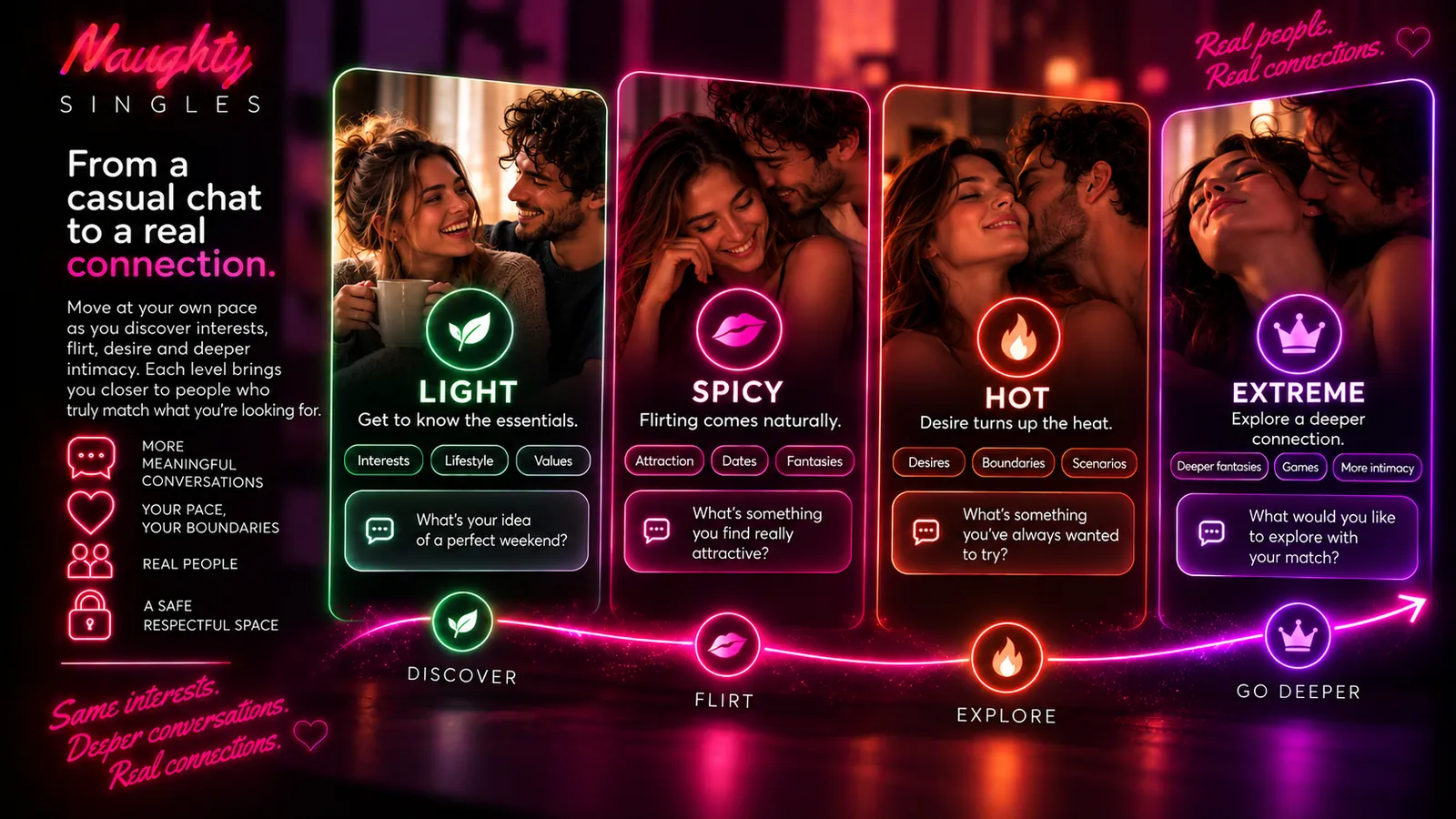
In Naughty Singles, Desire is one of the ten categories of the SPICY level. It measures, with tasteful cards, how you experience and express wanting someone, so the app can bring you closer to people whose desire meets yours halfway.
Why mutual desire in a relationship matters from the start
At the beginning, desire is often loud and obvious. Later it becomes subtler, and that's when differences show. One person expresses it by saying it; another by planning a special evening; another through a look held a second too long across a table. If you don't recognize the other person's language, you might think desire has faded when it's simply speaking differently.
The deeper issue is reciprocity. Many people describe the same painful pattern: always being the one who reaches out, who suggests, who seeks closeness. Over time, being the only one looking for desire makes you doubt it's there at all. That's why one of the real cards in the app says it plainly: “I need to feel mutual desire, not be the only one looking for it.”
Desire also has different rhythms. For some people it appears first and pulls them toward closeness. For others it grows once they already feel close and safe. Neither is more passionate. But two people who don't know this about each other can easily misread the pace.
How people express desire
Desire speaks more than one language. Most people are fluent in one or two and understand the others with a little practice.
In words
You say it: “I've been thinking about you all day.” Hearing it back matters just as much. For you, silence can feel like distance.
In attention
You show desire by focusing completely: your phone disappears, you remember every detail, you're fully there. You notice right away when someone does the same.
In a look
Your desire lives in eye contact, in a smile that lingers, in the tension of a pause. You need someone who can read between the lines.
In initiative
You show desire by seeking the other person out: suggesting the plan, making time, finding excuses to be close. You value it when that effort comes back.
In trust
Your desire grows when you feel safe and chosen. Calm, tenderness and consistency awaken it far more than grand gestures ever could.
What the Desire category measures
The first card is real, from the app; the rest are written in the style of the cards. All of them stay tasteful: they're about wanting and being wanted, never about anything explicit. Answer with ME TOO, DON'T CARE or NOT ME.
SPICYI need to feel mutual desire, not be the only one looking for it.
SPICYFeeling wanted matters to me as much as wanting.
SPICYDesire grows for me when I feel safe.
SPICYI like it when someone tells me clearly that they want to see me.
SPICYA look held a second too long tells me everything.
How desire styles combine
Two people who express desire in words will rarely wonder where they stand. Two people whose desire grows through trust will build it slowly and solidly. And different languages can work beautifully when both people learn to translate: the one who speaks through attention learns to say it out loud now and then, and the one who speaks in words learns to recognize a fully present evening as a declaration.
The difficult pattern isn't a difference in style; it's an imbalance. If one person is always the one reaching out, desire stops feeling mutual, whatever the reason. That's worth naming early, gently and without blame. Our guide on how to talk about desires with someone new offers simple ways to start that conversation.
Desire is closely linked to attraction, but they aren't the same. Attraction is the first pull; mutual desire is what keeps two people reaching for each other over time.
How to explore desire respectfully with someone new
- 01
Show interest, then leave space
Let the other person know you like them, and then give them room to show it back in their own way and at their own pace.
- 02
Notice their language
Words, attention, looks, initiative or trust: watch how they express interest before deciding it isn't there.
- 03
Talk about it without pressure
“I love it when you tell me you've been thinking about me” is honest and warm, and it gives the other person a clear, easy way to respond.
- 04
Consent is part of desire
Wanting someone never replaces asking. Mutual desire is only mutual when both people say yes, freely and at every step.
How Desire feeds your SPICY gem and your Match DNA
Your answers here shape your affinity in Desire, one of the 40 categories of your Match DNA. The comparison runs in both directions, which makes perfect sense for this category: mutual desire has to work for both people, not just one.
Desire joins the other SPICY categories to form your gem for that level: Total attraction, Nice spark or Spark to explore. You're only compared here if both of you chose SPICY. Deeper layers of intimacy live in the HOT level, which is also opt-in: you decide how far you want to go across the intensity levels, and you'll never receive a card from one you didn't activate.
If compatibility in intimacy matters to you before you meet, see our page on sexual compatibility before dating, or explore every compatibility category.
Frequently asked questions
What is mutual desire in a relationship?
It's the feeling that attraction flows both ways: you want the other person and you feel wanted in return, through their words, attention, looks or initiative. It isn't about intensity being identical all the time, but about both people reaching for each other. Without it, even a good connection can start to feel lonely.
How do you know if the desire is mutual?
Look at reciprocity over time. Do they seek you out, suggest plans, show interest in their own way and respond warmly when you do? One-off gestures mean little; a pattern of both people reaching out means a lot. If you're unsure, a gentle, honest conversation clarifies more than guessing.
What if one person feels more desire than the other?
It's common, especially early on or during stressful periods. The key is to talk about it kindly, without blame, and to understand each other's rhythm: some people feel desire first, others once they feel close and safe. If the imbalance is constant, it's worth knowing early.
Is the Desire category explicit?
No. Desire is a SPICY category, and its cards are tasteful: they talk about feeling wanted, reciprocity, looks and trust. More intimate topics belong to the HOT level, which you only play if you choose it. You'll never receive a card from a level you didn't activate.
How does Naughty Singles measure mutual desire?
With first-person cards like “I need to feel mutual desire, not be the only one looking for it,” answered with ME TOO, DON'T CARE or NOT ME. Your answers build an affinity in Desire, compared with other people's in both directions, only when both of you chose the SPICY level.